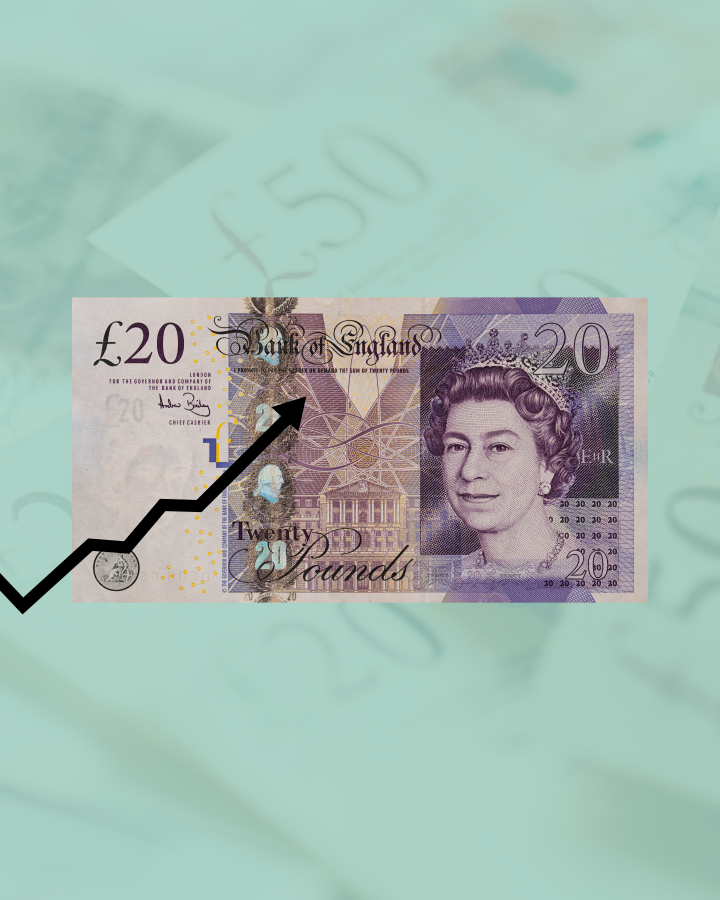
Too many times have I heard the catchphrase “save your money” and was never explained how to actually save intelligently. I’d like to say that I have a vaguely decent understanding of money in its general sense, but in truth, it has taken me a long time to be financially literate. And by that I don’t mean being Elon Musk on the stock market, but knowing where and how to invest money to maximise what you have. I’m a 21-year-old woman going into a master’s degree in September, so for me it’s more about having my savings put somewhere clever rather than sitting in my savings account at a 2% interest rate.
I have seen so many TikToks of out-of-touch influencers saying “you need to invest in the stock market” but remaining ambiguous about how. I always think, when watching these videos, why am I listening to someone who is so unfamiliar with regular day-to-day life give me financial advice? So hopefully this can be the bridge between obscure financial advice and real schemes you can hop onto.
Your 2% savings account is costing you money
You might not realise it, but your 2% AER savings account is actually costing you money. Inflation means, in the broad sense, that prices go up over time. This means that what you can buy with your money decreases every year even if the amount of money you have stays the same or grows slightly with a 2% AER. So if inflation is at 3% a year and your savings account is at 2% interest, your money is losing value. This is why wealthy people have no money in their bank accounts and are telling you to invest. The good news is that you can do things to prevent this.
What is an ISA?
From April 2027, the Cash ISA allowance will be reduced to £12,000 while Stocks and Shares and Innovative Finance ISAs will remain at £20,000. How does this affect me? A regular savings account earns interest and that interest might be taxed if it’s above your tax-free allowance. Contrarily, a Cash ISA earns interest but is never taxed. The new rule means only £12,000 of your allowance can sit in cash tax-free. The rest of your £20,000 allowance needs to go into a Stocks & Shares ISA or similar to stay tax-free. Basically, the government is trying to get people to invest their money instead of storing it.
In a Stocks and Shares ISA, instead of simply holding your money like a savings account, your money here will buy investments and any growth is tax-free. To start with this ISA, you’ll need to pick a platform. There are a lot of places that offer these ISAs and it goes from banks to commission-free brokers to robo-advisers. What you buy once inside is more important than the platform anyway. You can buy individual shares, meaning buying a piece of one specific company. You can research companies that are steady on the market and have a good dividend history to help you start out. This is higher risk because your investment rises and falls with that one business’s success.
Shares or funds?
Or, you can go for funds. A fund groups your money with other people’s and spreads it across multiple companies. The common starting point is an index tracker fund. This simply buys a small slice of every company in a chosen index like the largest 100 companies in the UK. People say to go for funds because if one company crashes, you’re still ok, whereas for individual shares it’s riskier. However, with this ISA there are fees involved. There’s usually a platform fee and then a fund fee, which is taken by the fund for managing your investments. Some platforms don’t charge or charge a small percentage. Bigger fund fees usually mean that a human is picking the stocks. It’s important to note that this ISA is not meant for people who will need that money in the next five years or so. The best returns happen over long periods like twenty years. Robo-adviser platforms can usually help you with how much risk you’re comfortable with and what works best for you. The conclusion of this is that this ISA isn’t a mysterious rich-person tool; it’s also for anyone who has a bit of money they can leave alone for years.
Premium Bonds
Premium bonds are my personal favourite. I won’t get into the details of Premium Bonds because I think most people are familiar with them, and if not, I would go to the NS&I website directly. Basically, every pound you hold in Premium Bonds is one entry into that month’s draw and prizes go up to £1 million. The overall prize fund rate is 3.8%, which is more than many savings accounts but there’s also a risk of winning nothing. On average, the odds of a £1 bond winning a prize are 22,000 to 1, so the more money you put in there, the better your chances are. It’s also tax-free and you can take out money whenever you want.
Many other interesting incentives are worth looking at as well. Stay tuned for part two!
This article is informational. I am not a financial expert, but this is what I have read. Figures correct as at August 2026.